
Commercial Chillers: What Facility Managers Need to Know
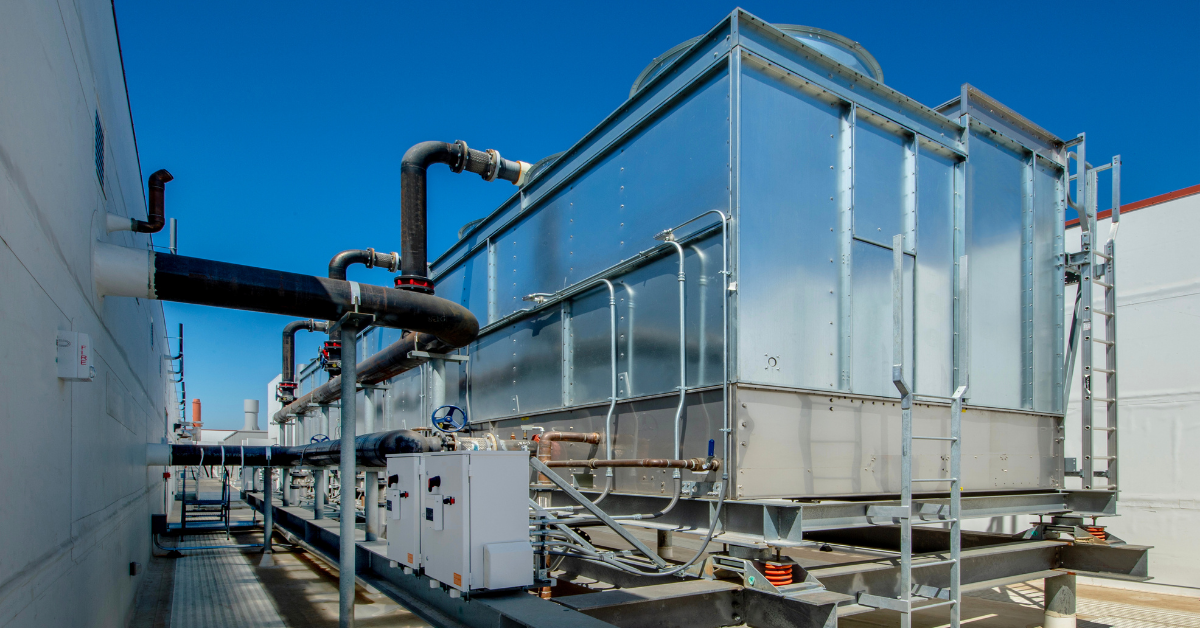
For large commercial and industrial facilities, chillers are often the single most important — and most expensive — piece of equipment in the entire HVAC system. They quietly handle the heavy lifting of cooling large buildings, data centers, hospitals, and manufacturing facilities, yet many facility managers inherit a chiller system without ever getting a clear explanation of how it actually works or what to watch for.
At Level One HVAC, we service chillers across a wide range of commercial and industrial facilities, and we find that a little understanding goes a long way toward better maintenance decisions, faster troubleshooting conversations, and smarter capital planning. Here’s what you need to know.
What Is a Chiller, and How Does It Work?
A chiller is a system that removes heat from water (or another fluid) through a refrigeration cycle, then circulates that chilled water throughout a building to cool the air. Unlike a rooftop unit that cools air directly, a chiller cools water first, and that water is then used — often through air handling units or fan coil units — to cool the air in occupied spaces.
The basic refrigeration cycle a chiller uses includes four key stages:
- Evaporation — refrigerant absorbs heat from the water passing through the evaporator, cooling the water
- Compression — the compressor pressurizes the refrigerant, raising its temperature
- Condensation — the hot, pressurized refrigerant releases heat (often to outside air or a cooling tower) and condenses back into a liquid
- Expansion — the refrigerant passes through an expansion valve, dropping in pressure and temperature, ready to absorb heat again
This cycle repeats continuously, with the chilled water looping out to the building and returning warmer, ready to be cooled again.
Types of Commercial Chillers
Air-Cooled Chillers These use outside air to reject heat from the refrigerant, similar to how a standard air conditioning condenser works. Air-cooled chillers are generally simpler to install and maintain since they don’t require a cooling tower or condenser water system, making them a common choice for small-to-mid-sized commercial buildings.
Water-Cooled Chillers These use a cooling tower and a separate condenser water loop to reject heat, rather than relying on ambient air. Water-cooled chillers are typically more energy-efficient than air-cooled units, especially at larger capacities, but they require additional equipment (cooling towers, condenser water pumps) and more involved maintenance.
Centrifugal Chillers Common in large commercial and industrial applications, centrifugal chillers use a rotating impeller to compress refrigerant. They’re known for high efficiency at large capacities and are often the choice for sizable buildings or campuses.
Screw Chillers These use twin rotating screws to compress refrigerant and are valued for reliability and relatively quiet operation, often used in mid-to-large commercial applications. Screw chillers typically offer a cooling capacity that falls between smaller scroll chillers and large centrifugal chillers.
Scroll Chillers Typically found in smaller capacity applications, scroll chillers use a simpler compression mechanism and are known for durability and lower maintenance complexity, though they generally serve smaller cooling loads than screw or centrifugal systems.
Absorption Chillers Rather than using electrically-driven mechanical compression, absorption chillers use a heat source (steam, hot water, or direct-fired gas) to drive the refrigeration cycle. These are less common but can make sense for facilities with access to low-cost waste heat or steam.
Why Chillers Deserve Serious Maintenance Attention
Chillers represent a significant capital investment, and they’re often central to a building’s entire comfort — or in some cases, critical operations like temperature-sensitive manufacturing or data center cooling. A handful of reasons chiller maintenance deserves real priority:
Scale of Impact Unlike a single rooftop unit serving one zone, a chiller failure can affect an entire building or campus at once. The stakes of downtime are proportionally much higher.
Complexity Chillers involve refrigeration cycles, water treatment, pumps, cooling towers (for water-cooled systems), and often sophisticated controls — all of which need to work together properly. More components mean more potential points of failure if maintenance is neglected.
Energy Consumption Chillers are typically among the largest electrical loads in a commercial building. A poorly maintained chiller doesn’t just risk breakdown — it also drives up energy costs significantly, since reduced efficiency at this scale has an outsized impact on the utility bill.
Cost of Replacement Chillers are expensive to replace, and extending the usable life of an existing unit through proper maintenance can represent substantial capital savings over time.
Common Chiller Problems We See
Refrigerant Issues Low refrigerant charge, often due to slow leaks, reduces cooling capacity and efficiency, and can eventually damage the compressor if left unaddressed.
Water Treatment Problems Scale buildup, corrosion, and biological growth (like algae in cooling towers) in water-cooled systems reduce heat transfer efficiency and can damage components over time. Water treatment is one of the most commonly overlooked aspects of chiller maintenance.
Compressor Wear As the heart of the system, compressor issues — whether from age, poor lubrication, or electrical problems — are often the most expensive chiller repairs, making early detection through regular maintenance especially valuable.
Condenser and Evaporator Fouling Dirt, scale, or debris buildup on heat exchanger surfaces reduces the chiller’s ability to transfer heat efficiently, forcing the system to work harder for the same cooling output.
Control System Issues Chillers rely on sophisticated controls to manage capacity, sequencing (for multiple-chiller plants), and safety functions. Sensor drift or control malfunctions can cause inefficient operation or nuisance shutdowns.
Building a Chiller Maintenance Plan
A solid chiller maintenance program typically includes:
- Regular refrigerant checks to catch slow leaks before they affect performance or damage the compressor
- Water treatment monitoring and chemical treatment for water-cooled systems, to prevent scale and biological growth
- Condenser and evaporator tube cleaning on a scheduled basis to maintain heat transfer efficiency
- Compressor inspections and oil analysis, which can reveal developing issues before they cause a failure
- Control system calibration and testing, ensuring sensors and sequencing logic are performing accurately
- Vibration analysis, which can detect early signs of mechanical wear in rotating components
- Comprehensive annual inspections, often more detailed than routine seasonal maintenance, to catch issues that shorter visits might miss
Because chillers are such a significant investment and carry such high stakes if they fail, many facilities benefit from a maintenance plan specifically tailored to their chiller’s type, age, and criticality — rather than treating it the same as smaller, less critical equipment.
When to Consider Replacement
Chillers can often be kept running efficiently for many years with proper maintenance, but there comes a point where replacement makes more financial sense than continued repair. Signs worth evaluating include:
- Rising energy costs that don’t correspond to increased cooling demand
- Increasingly frequent repairs or part availability issues (especially for older or discontinued models)
- Refrigerant type phase-out issues, particularly for older chillers using refrigerants no longer in production
- Capacity that no longer matches the building’s actual cooling load, whether from building changes or original oversizing
A proper evaluation should compare the true cost of continued operation and repair against the cost of replacement, factoring in efficiency gains a newer chiller would likely provide.
Partner with a Team That Understands Chillers
Chillers are complex, high-value equipment that deserve a maintenance partner who genuinely understands how they work — not just surface-level service. At Level One HVAC, our technicians are experienced across air-cooled and water-cooled chiller systems, helping facility managers keep this critical equipment running efficiently and reliably for the long term.
Is your chiller due for an inspection, or are you weighing repair versus replacement? Contact Level One HVAC to schedule an assessment with our commercial HVAC team.
Serving all of Michigan
Toll Free: 844-616-4822
Grand Rapids: 616-616-4822
New Hudson: 248-486-6500
West Branch: 989-999-4822