
Makeup Air Units (MAU)
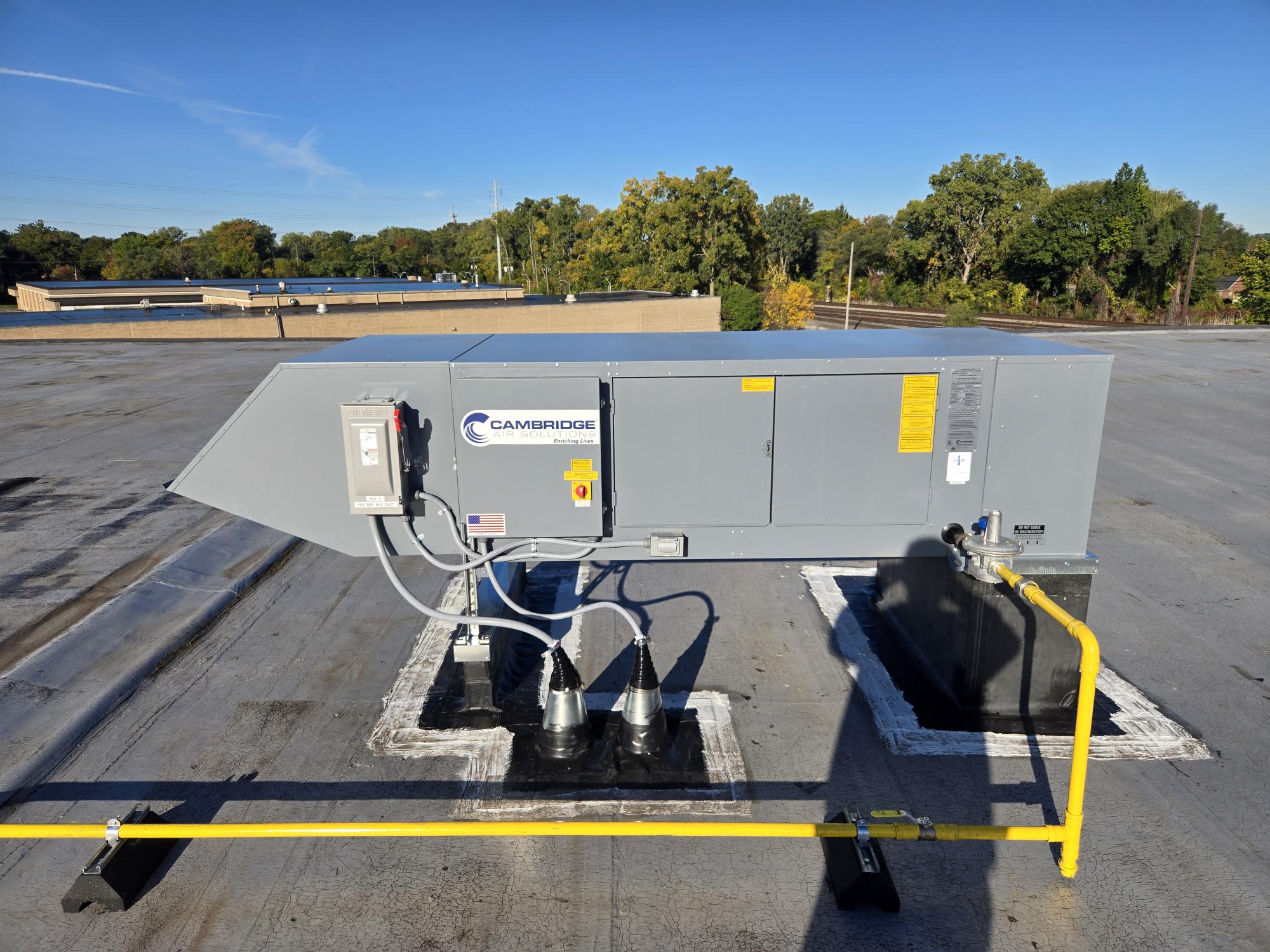
Every commercial building that exhausts air has to bring air back in. Kitchen hoods, paint booths, restroom exhaust fans, and industrial process ventilation all push air out of the building. If that air isn’t replaced on purpose, the building replaces it on its own, pulling it through door gaps, window seals, and cracks in the envelope. The result is drafts, doors that slam or won’t open, poor ventilation, and equipment that doesn’t perform the way it should.
A makeup air unit (MAU) solves that problem by supplying fresh outdoor air to replace what the building exhausts. It’s one of the most important and most overlooked pieces of equipment in many commercial and industrial facilities.
At Level One HVAC, we install and service makeup air systems across Michigan. Here’s what every facility manager should know.
What Is a Makeup Air Unit?
A makeup air unit is a dedicated system that brings outdoor air into a building, filters it, conditions it (usually by heating it, and sometimes cooling it), and distributes it to the space. Its job is to balance the air leaving through exhaust systems so the building stays at a stable, slightly neutral pressure.
Unlike a standard HVAC unit, which mainly recirculates and conditions indoor air, a makeup air unit is built to handle 100% outdoor air. That’s a much bigger load, especially in Michigan, where winter air can be well below freezing.
Why Makeup Air Matters
Building pressure and comfort
When exhaust fans remove more air than the building takes in, the space goes into negative pressure. You’ll see doors that are hard to open, whistling at door frames, cold drafts near entrances, and uneven temperatures.
Exhaust equipment performance
Exhaust fans and hoods can’t move air effectively if there’s no replacement air available. Kitchen hoods may fail to capture smoke and grease, and process exhaust may not remove fumes the way it was designed to.
Combustion safety
In buildings with gas-fired equipment, such as boilers, water heaters, and furnaces, negative pressure can interfere with proper venting. It can cause backdrafting, where combustion gases, including carbon monoxide, are pulled back into the building instead of exiting through the flue. This is a serious safety issue.
Indoor air quality
Uncontrolled air infiltration brings in dust, humidity, and outdoor pollutants through the cracks and gaps in the building. A makeup air unit supplies filtered air through a controlled path instead.
Energy efficiency
Bringing in unconditioned outdoor air, especially in winter, is expensive. A properly designed makeup air system heats that air efficiently and uses controls to supply only what’s needed.
Where Makeup Air Units Are Used
Makeup air units are common anywhere a building has significant exhaust:
- Commercial kitchens and restaurants, where hoods exhaust large volumes of air
- Manufacturing and industrial facilities with process exhaust, welding, or fume extraction
- Paint booths and finishing areas
- Warehouses and distribution centers with large exhaust or combustion equipment
- Laboratories and healthcare facilities with strict ventilation requirements
- Parking structures and garages
- Commercial laundries and similar high-exhaust operations
Types of Makeup Air Units
Direct-fired makeup air units
These heat incoming air by passing it directly through a gas burner. They’re very efficient because nearly all the heat goes into the airstream. They’re common in industrial and warehouse settings, though they’re not suitable for every application, and they have specific code requirements.
Indirect-fired makeup air units
These heat air through a heat exchanger, so combustion gases are vented outside and never mix with the supply air. They’re a common choice where air quality is a priority, such as kitchens, food facilities, and occupied spaces.
Hydronic (hot water or steam) units
These use heat from a boiler system to warm incoming air. They fit well in facilities that already have a central boiler plant.
Electric units
These use electric heating elements and are typically found in smaller applications or where gas isn’t available.
Units with cooling
Many makeup air units also include cooling coils, which makes them suited for facilities where incoming air needs to be tempered in summer as well as winter.
Energy recovery options
Some systems include heat recovery, which uses exhaust air to pre-condition incoming air, lowering the energy cost of heating or cooling all that outdoor air.
Common Makeup Air Problems We See
Not enough air
A clogged filter, a failed fan, or a stuck damper can reduce supply air and put the building into negative pressure.
Poor temperature control
If the unit isn’t heating the incoming air properly, occupants feel cold drafts near entrances and in work areas.
Failed or misadjusted controls
Makeup air units are often interlocked with exhaust fans so they run together. When those interlocks or sensors fail, the system can fall out of balance.
Dirty filters and coils
Because these units handle 100% outdoor air, they load up with dust, pollen, and debris quickly.
Burner and ignition problems
For gas-fired units, ignition failures, dirty burners, and gas supply issues are common causes of no-heat calls, especially at the first cold snap.
Frozen coils
In hydronic and cooling units, a freeze condition can damage coils if freeze protection controls fail.
Imbalanced systems after changes
When exhaust is added or modified, such as a new kitchen hood or process equipment, the makeup air system often needs to be rebalanced. Many buildings run for years with a mismatch that nobody noticed.
Fall Is the Time to Check Your Makeup Air Unit
With winter coming, makeup air units are about to face their toughest job. A unit that only needed to temper mild air in September has to heat air that may be below freezing in January. A fall inspection helps catch problems before they become mid-winter emergencies.
A good pre-winter check typically includes:
- Replacing or cleaning filters
- Inspecting and testing burners, ignition, and safety controls
- Checking the heat exchanger for corrosion, cracks, or buildup
- Testing dampers, actuators, and fan operation
- Verifying interlocks with exhaust fans
- Confirming temperature controls and setpoints
- Checking freeze protection on hydronic and cooling coils
- Measuring airflow to confirm the system is meeting the building’s needs
- Documenting findings for maintenance records and compliance
Signs Your Building May Need Attention
- Doors that are difficult to open or that slam shut
- Cold drafts at entrances and loading docks
- Exhaust hoods or fans that don’t seem to be pulling air well
- Odors lingering in the space
- Backdrafting or poor draft on gas-fired equipment
- Rising heating costs with no clear cause
- Uneven temperatures between areas of the building
If you notice any of these, it’s worth having a technician evaluate the makeup air system and the building’s overall air balance.
Work With a Team That Understands Air Balance
Makeup air isn’t just about a single piece of equipment. It’s about how the supply, exhaust, and heating systems all work together. At Level One HVAC, our licensed and insured technicians install, service, and troubleshoot commercial makeup air systems with 24/7 emergency support, backed by 25 years of experience and a 100% satisfaction guarantee.
Is your building struggling with drafts, negative pressure, or weak exhaust performance? Contact Level One HVAC to schedule an inspection of your makeup air system before winter arrives.
Serving all of Michigan
Toll Free: 844-616-4822
Grand Rapids: 616-616-4822
New Hudson: 248-486-6500
West Branch: 989-999-4822